

Online Orton-Gillingham Tutoring: Break Barriers with Learnability
At Learnability, our expert Orton Gillingham Tutors uses a proven, structured approach to help students with reading, writing, and spelling challenges. Orton Gillingham's approach is customized to each learner’s needs. Whether your child struggles with dyslexia or other learning differences, our tutors are committed to overcoming obstacles and fostering academic success. Contact us today to schedule a consultation and start your child's learning journey!
Get Personalized Orton-Gillingham Tutoring
Our Orton-Gillingham tutoring focuses on building strong reading and writing skills through direct, step-by-step instruction. Our tutors use multisensory techniques to help students make connections between sounds, letters, and words, which improves their ability to read and write independently.
We work with students to develop strategies that make learning more accessible, boosting both their academic performance and self-confidence.

What Is the Orton-Gillingham Approach?
Orton-Gillingham is a specific method of teaching designed for children with dyslexia and other language-based learning differences. It was developed in the 1930s by neuropsychiatrist Dr. Samuel T. Orton and educator Anna Gillingham. Unlike the traditional reading program, this is an individualized method regarding the approach to the learner and employs a multisensory way of understanding complex language concepts.
It has been designed to be highly multisensory so that the senses are engaged simultaneously, increasing the efficacy of information processing. Through seeing, hearing, or acting out the language, students can acquire and retain knowledge in several different ways.
How It Works
The Orton-Gillingham approach is greatly focused on one-on-one instruction, understanding that each and every child has a different learning style. Multi-sensory reading programs make much of using sight, sound, and touch as tools to break words down, see patterns, and increase the flow while reading. This method will be quite helpful for those students who have had difficulty with traditional teaching in phonics and can act as an uplifting change of pace.
Key Characteristics of the Orton-Gillingham Method
- Individualized instruction: Every lesson is customized to fit a student’s unique needs. This form of instruction guarantees that every learner is taught at his or her own pace; lessons become more complicated as the learner progresses.
- Sequential Learning: The instruction begins with the basics and builds up to more complicated concepts, such as recognizing and differentiating tricky letter pairs like “b, d,” “q, p,” and “m, w.”
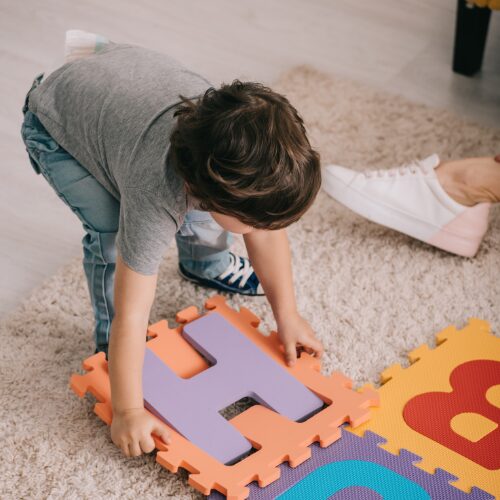
- Multisensory Techniques: Students see, say, and physically manipulate letters and sounds, activating multiple senses. For example, when a student uses sandpaper letters to trace the shape of a letter, the student can feel the shape of the letter in addition to seeing it.
Why Choose Orton-Gillingham Instruction for Your Child?
One of the hallmarks of Orton-Gillingham instruction is its success in teaching children who have dyslexia and other language-based learning disabilities. If your child has been diagnosed with dyslexia, or simply has a hard time reading, writing, or spelling, this approach will help your child rise above those difficulties with such structured, supportive instruction.
The flexibility of the Orton-Gillingham reading program to your student is its strength. As the child learns, the program changes to topics that are more difficult and ideas that are more complex, so that the child is built on a strong foundation of literacy. This assures that even students who have hitherto experienced difficulties can catch up and develop the right skills for confident reading.
Orton-Gillingham Reading Program: A Structured Path to Literacy
One of the greatest problems in dyslexic children is the confusion between such similar-looking letters as “y, g” or “m, w.” The Orton-Gillingham reading program addresses this issue with multisensory phonics strategies that allow a student to differentiate between letters, sounds, and words.

The Reading Program Is Designed to Be:
- Explicit: Every sound, letter, and rule is explained in detail, leaving no room for confusion.
- Systematic: The lessons are arranged in a logical order, moving from simple to complex concepts.
- Cumulative: As your child masters each new skill, it is practiced and expanded in future lessons.
This systematic approach does not only benefit a child with dyslexia but also helps in developing the skills and tools of a student experiencing reading or spelling difficulty so they can be successful in the long run.
Multisensory Reading Program Benefits
Multisensory reading programs such as Orton-Gillingham prove to be very effective, as they include all possible parts of the brain and involve visualizing and verbalizing, auditory, and tactile techniques through which children learn in various ways. For example:
- Visual Learners can view the letters and words as well, reinforcing spelling and recognition.
- Auditory Learners can hear the sounds, making them have an understanding of the relationship between letters and sounds.
- Kinesthetic Learners will practice hands-on activities, like writing letters in the sand or forming the letters with their hands, which reinforces learning.
Such an approach will make learning how to read an enjoyable and interesting experience for students, whatever their preferred learning style.
Who Needs an Orton Gillingham Tutor?
Even though the Orton-Gillingham approach is highly regarded in its effectiveness with children who suffer from dyslexia, it can be used for a wide range of learners. Some of the groups that are helped are:
- Children with dyslexia: It is a highly structured, multisensory treatment that addresses the specific needs of children who face this problem. This can help them to overcome challenges encountered in reading and acquire strong literacy skills.
- Students with other learning disabilities: Whether the cause of the student’s struggles is ADHD, dysgraphia, or processing disorders, the individualized and multisensory nature of the Orton-Gillingham approach can help.
- Struggling students in Phonics: This approach will be helpful even for students who have not been identified as being weak in learning and especially those who find conventional methods of teaching phonics difficult to understand, but if it doesn’t Special needs tutor might help them.
The Orton-Gillingham Curriculum: Building Lifelong Readers
At Learnability, we have developed a highly structured Orton-Gillingham curriculum that provides solid reading and writing potential for every student of any age and ability. Whether your child is just setting off on their literacy journey or has arrived at a bump in the road, our curriculum takes a one-step-at-a-time approach toward success. We focus on the basics and take them through increasingly complex materials so as to see to it that our students have established a firm foundation in reading, writing, and spelling.
Learnability in Action
At Learnability, we individualize learning to the individual needs of a student through the Orton-Gillingham method. Our experienced instructors work one-on-one with students to ensure they get the attention and support needed to thrive. We believe that every child can learn and succeed if given the right tools and approach.
Get in touch with us today to schedule a consultation and discover how Orton-Gillingham tutoring can transform your child’s reading journey.
Frequently Asked Questions (FAQs)
Parents Ask — We Answer
My child has been struggling to read for years and nothing has worked. Could Orton-Gillingham finally help?
Yes. Orton-Gillingham is one of the best-known structured literacy approaches for students with dyslexia and reading difficulties. It has been used for decades and forms the foundation of many structured literacy programs for students with dyslexia. It works where other methods have not because it teaches reading explicitly and through multiple senses — matching how children with dyslexia actually learn. While every child’s progress is different, many parents notice their child guessing less, reading more accurately, and approaching books with less anxiety within the first few weeks.
Book a free trial session at The Learnability today.
My child has dyslexia. What is happening in their brain — and how does Orton-Gillingham help?
Dyslexia affects phonological processing — the brain’s ability to connect written letters to spoken sounds. This is why reading feels slow and effortful for your child despite genuine effort. Orton-Gillingham directly targets this by teaching letter-sound connections through seeing, hearing, saying, and touching simultaneously — building stronger, more efficient reading pathways in the brain. Research from Yale University and other educational institutions has shown that structured literacy instruction can strengthen the reading pathways used by many students with dyslexia.
Find out if Orton-Gillingham is right for your child — book an assessment today.
My child’s school says they are getting reading support. So why are they still falling further behind every year?
Many children with dyslexia do not make sufficient progress with balanced literacy alone because they benefit from explicit, structured literacy instruction. Most school reading support relies on children naturally absorbing reading skills through exposure to books — which is not enough for children whose brains need direct, systematic teaching of phonics and decoding. Orton-Gillingham is completely different — every skill is taught directly and in a carefully planned sequence, with nothing left to chance. If your child has had school support for over a year with no meaningful progress, it is worth exploring whether a structured literacy approach could make the difference.
Contact The Learnability — we will explain exactly what your child needs.
Is Orton-Gillingham only for dyslexia — or can it help children with ADHD or autism too?
Orton-Gillingham helps any child struggling with reading or spelling — not only those with a dyslexia diagnosis. Many children with ADHD benefit from the active, multisensory structure of Orton-Gillingham lessons — the tapping, tracing, and movement built into every session naturally suits children who learn better through doing. Some children with autism also respond well to its predictable, systematic format when reading difficulties are present. No formal diagnosis is required to begin. If your child is struggling with reading, our specialists can help identify whether Orton-Gillingham is the right fit.
Contact us for a free consultation at The Learnability.
What actually happens during an Orton-Gillingham lesson — what will my child be doing?
Every session follows a clear, consistent structure that children quickly feel comfortable with. Your child will review letter sounds, practise new connections through seeing, hearing, and tracing, blend sounds to read words, segment words for spelling, and read short passages at the right level. At The Learnability, these activities are delivered through live one-on-one online sessions using interactive tools that keep children engaged while preserving the full multisensory principles of the Orton-Gillingham approach. Sessions are varied, changing activity every few minutes to maintain focus.
See our approach in action — book a free trial session today.
Will Orton-Gillingham improve my child’s spelling as well as reading?
Yes — spelling and reading are taught together in every Orton-Gillingham session as part of a structured literacy approach. Every sound-letter connection is learned in both directions — reading the letter and producing the sound, and hearing the sound and writing the letter. For children whose spelling is significantly weaker than their reading — a very common pattern in dyslexia — this dual approach is particularly effective. Many parents notice spelling improvements within the first months of consistent sessions, often alongside growing reading confidence.
Start improving your child’s reading and spelling — book a free trial today.
My child hates reading and refuses to try. Can Orton-Gillingham work for a child who has completely shut down?
Yes — and this is one of the most common situations we see at The Learnability. Reading refusal is usually a sign that a child has experienced enough failure to stop believing that trying is worth it. Orton-Gillingham is designed to help children experience early success by starting at the right instructional level and building skills step by step. While every child’s progress is different, many parents notice increased confidence and a more positive attitude toward reading within the first few weeks. Building confidence is just as central to our work as building skills.
Contact The Learnability — we have helped many children who arrived convinced they could never read.
How do I know if my child needs Orton-Gillingham or a different reading program?
Orton-Gillingham is best suited for children whose reading difficulty is caused by weak phonological processing — the core deficit in dyslexia. Key signs include struggling to decode unfamiliar words, poor spelling, slow reading, letter reversals, and reading well below grade level. If your child reads accurately but does not understand what they read, they may benefit from our Visualizing and Verbalizing program instead. The most reliable way to find out is through a specialist assessment — our Orton-Gillingham Assessment identifies exactly what is causing your child’s difficulty and confirms the right structured literacy program for them.
Contact The Learnability today to arrange an assessment or book a free trial session.
Research and Program Questions
Is Orton-Gillingham aligned with the Science of Reading?
Yes. Orton-Gillingham aligns closely with the Science of Reading — the body of research that identifies how children best learn to read. Both prioritise structured, phonics-based methods for literacy instruction backed by decades of research. The Science of Reading emphasises explicit teaching of phonemic awareness, phonics, fluency, vocabulary, and comprehension — all of which are central to the Orton-Gillingham approach. Studies consistently confirm OG’s effectiveness, especially for children with dyslexia and struggling readers.
Learn more about our structured literacy programs at The Learnability.
Is Orton-Gillingham evidence-based?
Yes. The Orton-Gillingham approach is evidence-based and is endorsed by the International Dyslexia Association. Research confirms its effectiveness in improving reading skills — particularly phonological awareness and decoding — for students with dyslexia and other reading difficulties. It is one of the most well-researched structured literacy approaches available and has helped hundreds of thousands of students around the world build lasting reading skills. At The Learnability, all of our tutoring is grounded in evidence-based structured literacy programs.
Book a free trial session and experience our evidence-based approach today.